2026 BMW X5 suits buyers who want more interior room, an available xDrive50e plug-in hybrid with up to 38 miles of electric range, and a larger infotainment display. The 2026 Porsche Cayenne is the stronger choice for buyers who prioritize a slightly higher towing ceiling and a wider range of upper-tier performance trims. Neither vehicle is a compromise. The choice comes down to how you weight cargo space and daily-driver versatility against Porsche’s powertrain breadth.
| Spec | 2026 BMW X5 xDrive40i | 2026 Porsche Cayenne Base |
|---|---|---|
| Engine | 3.0L Turbocharged I6 with 48V Mild Hybrid | 3.0L Single-Turbo V6 |
| Horsepower | 375 hp | 348 hp |
| Torque | 398 lb-ft | 368 lb-ft |
| Transmission | 8-speed automatic | 8-speed Tiptronic S automatic |
| Drivetrain | AWD (xDrive) | AWD |
| EPA City / Hwy / Combined | 23 / 27 / 25 mpg | 17 / 23 / 19 mpg |
| Length | 194.3 in | 194.1 in |
| Height | 69.1 in | 66.9 in |
| Cargo, 2nd Row Up | 33.9 cu ft | 27.3 cu ft |
| Max Cargo | 72.3 cu ft | 60.3 cu ft |
| Towing | 7,200 lbs | 7,716 lbs |
| Seating | 5 | 5 |
| Basic Warranty | 4 yr / 50,000 mi | 4 yr / 50,000 mi |
BMW X5 xDrive40i pairs its 3.0L turbocharged inline-6 with a 48V mild hybrid system, producing 375 hp and 398 lb-ft of torque through an 8-speed automatic. That 30 lb-ft torque advantage over the Cayenne’s 368 lb-ft translates to noticeably stronger mid-range pull in everyday driving.
The Cayenne base trim delivers 348 hp from a 3.0L single-turbo V6 matched to an 8-speed Tiptronic S automatic. At the base trim level, BMW X5 holds the horsepower lead.
BMW X5 xDrive50e plug-in hybrid returns 483 hp combined and up to 38 miles of electric range, while the M60i raises output to 523 hp.
The Cayenne also offers gasoline and hybrid variants, though those sit outside the base comparison addressed here. BMW X5 xDrive50e combines electric commuting capability with a gasoline engine for longer trips.
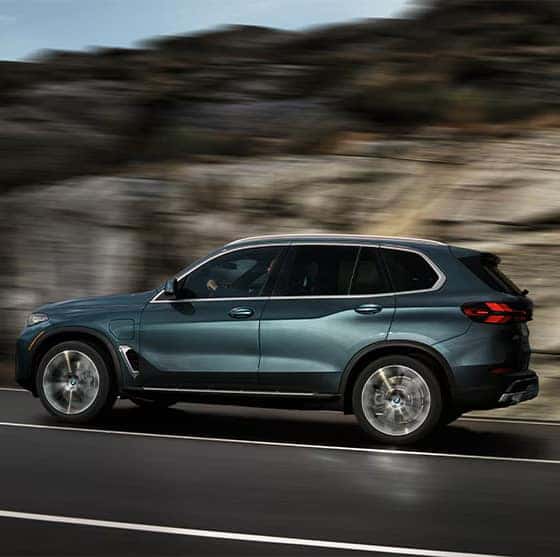
Actual range will vary depending on vehicle configuration, driving and charging habits, traffic conditions, outside temperature, and other factors.
BMW X5 also posts better fuel economy at every EPA measure: 23 city / 27 hwy / 25 combined against the Cayenne’s 17 city / 23 hwy / 19 combined.
BMW X5 stands 69.1 inches tall against the Cayenne’s 66.9 inches. The taller body contributes to the upright proportions and spacious cabin feel of BMW X5.
On cargo, the gap is significant. Behind the second row, BMW X5 provides 33.9 cu ft versus the Cayenne’s 27.3 cu ft, a difference of 6.6 cubic feet.
With the rear seats folded, BMW X5 expands to 72.3 cu ft compared to the Cayenne’s 60.3 cu ft.
For families loading sports equipment, strollers, or luggage for multiple passengers, BMW X5 wins this category outright.
Both vehicles seat five. BMW X5 offers a panoramic moonroof as standard equipment. The available Harman Kardon 16-speaker audio system, Extended Merino Leather upholstery, and Glass Controls with the available CraftedClarity package round out a premium interior that competes directly with the Cayenne’s cabin execution.
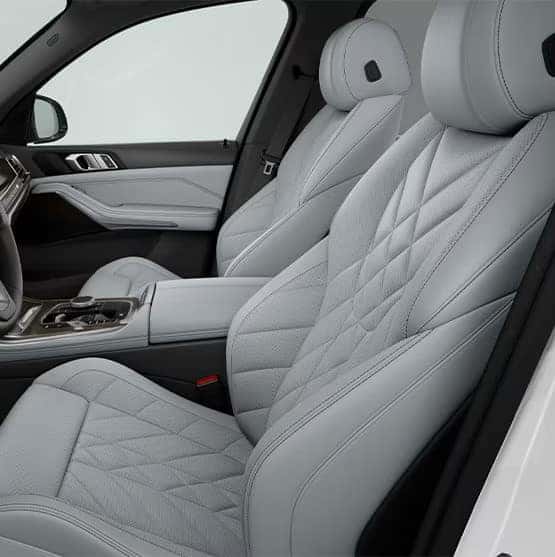
The Cayenne answers with standard two-zone automatic climate control, along with an available front passenger display and available four-zone automatic climate control. Both cabins are well-appointed. BMW X5 simply delivers more usable cargo space for the same five occupants.
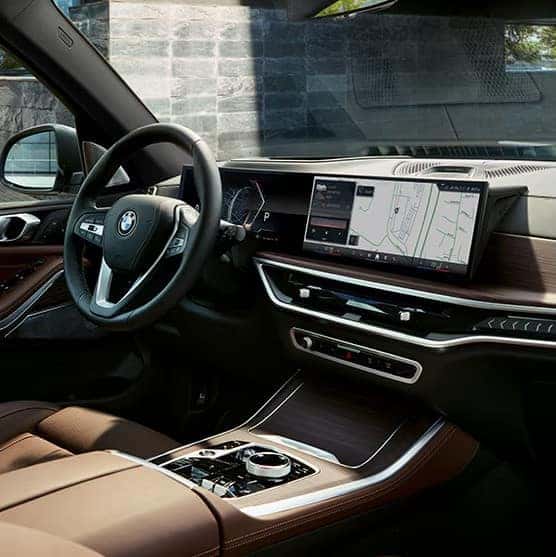
BMW X5 uses the BMW Curved Display: a single continuous panel combining a 12.3-inch digital gauge cluster and a 14.9-inch central touchscreen. The Cayenne runs a 12.3-inch PCM touchscreen paired with a 12.6-inch digital instrument cluster. BMW X5’s 14.9-inch screen is the larger of the two central displays in this comparison.
Both vehicles offer wireless Apple CarPlay and wireless Android Auto. BMW X5 adds the My BMW App, Advanced Real-Time Traffic Information, and Comfort Access keyless entry and start.
Remote Engine Start is available on the 40i models. The Cayenne brings the My Porsche App, Amazon Alexa integration, and the Porsche App Center for third-party app downloads.
On safety, both vehicles come standard with forward collision warning with automatic emergency braking, blind-spot warning, and lane departure warning. BMW X5 adds standard blind spot intervention and lane departure steering assist, which can provide steering input to help the driver remain in the lane. The Cayenne includes a standard surround-view camera system. BMW X5 makes available Highway Assistant with hands-free driving up to 85 mph on controlled-access highways one of its most distinctive capability offerings.
Driver assistance features are not a substitute for attentive driving. Always pay attention to traffic, surroundings, and road conditions. Highway Assistant availability and functionality are subject to road, geographic, and operating limitations. Refer to the owner’s manual or a BMW Center for details.
Both BMW X5 and Porsche Cayenne carry a matching basic warranty: four years and 50,000 miles. BMW X5 backs that with a powertrain warranty of four years or 50,000 miles. Porsche’s powertrain warranty terms for the Cayenne were not available at time of publication and should be confirmed with your Porsche dealer.
BMW X5 posts a combined EPA fuel economy of 25 mpg against the Cayenne’s 19 mpg. Over 15,000 miles annually, that six-mpg advantage can reduce fuel consumption in everyday driving. BMW X5 xDrive50e extends the range of powertrain choices with up to 38 miles of electric range.
Standard content is a meaningful factor here. BMW X5 includes a panoramic moonroof, adaptive dampers, LED exterior lighting, Comfort Access, and wireless connectivity at standard trim. Adaptive dampers tune the suspension response as driving conditions change.
BMW X5 is assembled in the United States at BMW’s Spartanburg, South Carolina plant.
For most buyers in Grand Rapids and the surrounding Michigan market, BMW X5 leads this base-model comparison in horsepower, torque, cargo capacity, and EPA fuel economy. The Cayenne leads in maximum towing capacity.
Sharpe BMW carries current 2026 BMW X5 inventory. If the numbers above align with what you are looking for in your next vehicle, the next step is a hands-on test drive. The team at Sharpe BMW can walk you through trim differences, available packages, and financing options in person.
BMW X5 has more cargo space. It offers 33.9 cu ft behind the second row and 72.3 cu ft maximum, compared to the Cayenne’s 27.3 cu ft and 60.3 cu ft.
BMW X5 delivers better fuel economy. BMW X5 xDrive40i returns 23 city / 27 hwy / 25 combined mpg. The Porsche Cayenne base posts 17 city / 23 hwy / 19 combined mpg.
Yes. BMW X5 xDrive50e is a plug-in hybrid delivering 483 hp combined and up to 38 miles of electric range. The Porsche Cayenne also offers hybrid variants, though the specific base trim compared here is gasoline-only.
Actual range will vary depending on vehicle configuration, driving and charging habits, traffic conditions, outside temperature, and other factors.
The Porsche Cayenne base has a slightly higher towing capacity at up to 7,716 lbs. BMW X5 tows up to 7,200 lbs with the available factory-installed trailer hitch.
Yes. Available Highway Assistant allows hands-free driving at speeds up to 85 mph on controlled-access highways, subject to operating and geographic limitations. The driver must remain attentive and be prepared to take control at all times.
BMW X5 uses the BMW Curved Display with a 14.9-inch central touchscreen and a 12.3-inch digital gauge cluster. The Porsche Cayenne uses a 12.3-inch PCM touchscreen and a 12.6-inch digital instrument cluster.
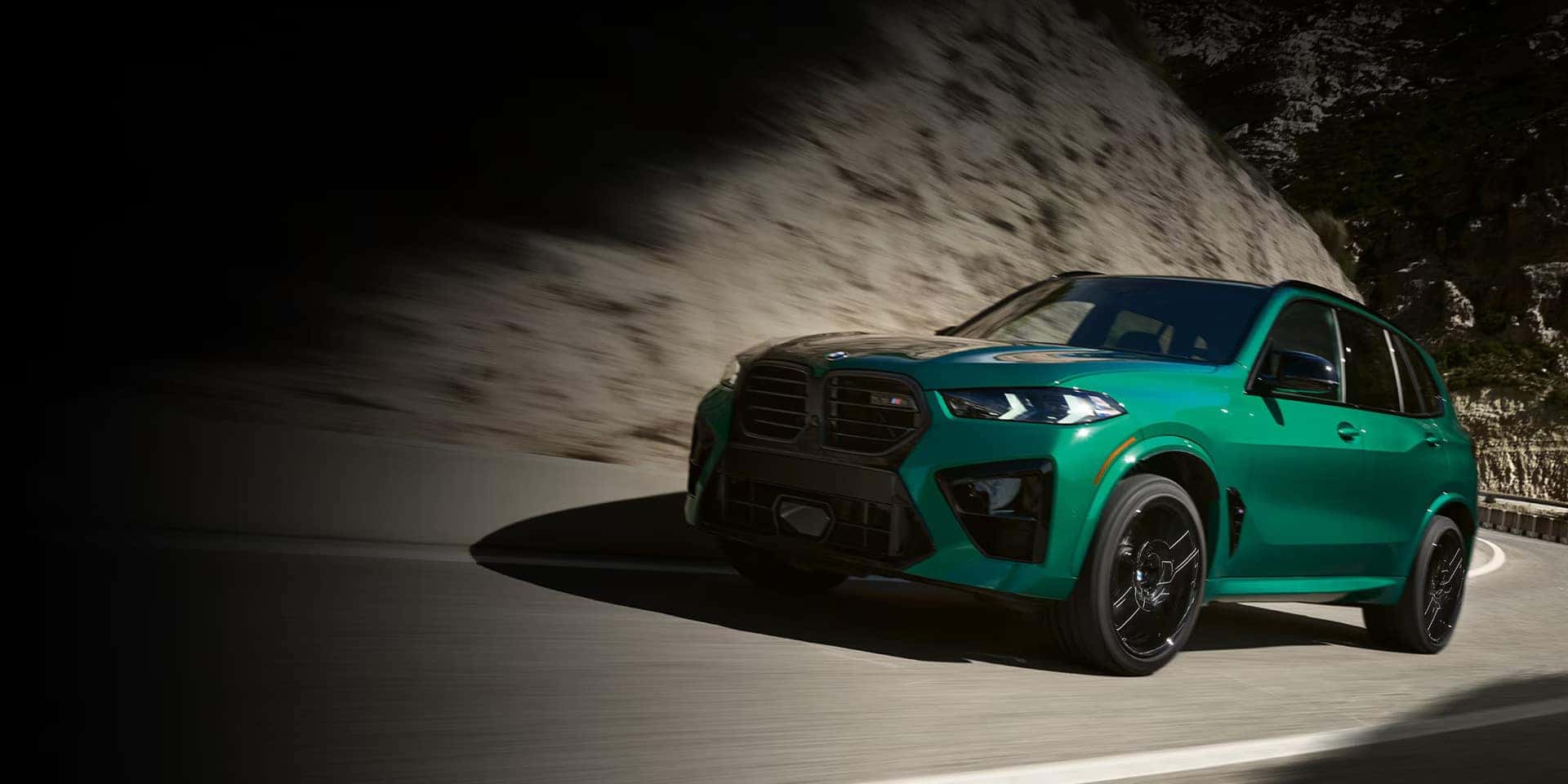
2026 BMW X5 is available in five models: sDrive40i, xDrive40i, xDrive50e, M60i, and M Competition. The sDrive40i is rear-wheel drive. The xDrive40i, xDrive50e, M60i, and M Competition use BMW xDrive all-wheel drive.
2026 BMW X5 is assembled in the United States at BMW’s Spartanburg plant in South Carolina.