For the buyer who prioritizes maximum range and faster charging on long trips, the BMW i3 is the stronger choice. Its 440-mile estimated range and 400 kW charging capability separate it clearly from the Model 3. The Tesla Model 3 Performance edges ahead on peak horsepower at 500 hp vs. 463 hp, and it offers a proven track record with over-the-air updates and a wide Supercharger network. Buyers who want a driver-focused sports sedan with next-generation battery technology will find the BMW i3 more compelling. Buyers who want a lower entry point and an established software ecosystem may prefer the Model 3.
| Specification | 2027 BMW i3 50 xDrive | 2027 Tesla Model 3 Performance |
|---|---|---|
| Horsepower | 463 hp | 500 hp |
| Torque | 476 lb-ft | 554 lb-ft |
| Drivetrain | AWD, xDrive | AWD |
| Estimated EV Range | 440 miles | 363 miles |
| DC Fast Charging | 400 kW, 800V | 225 kW |
| Charge Port | NACS, CCS adapter included | NACS |
| Central Display | 17.9-inch touchscreen | 15.4-inch touchscreen |
| Bidirectional Charging | Yes, V2L, V2H, V2G | Yes |
| Adaptive Suspension | Optional | Available on Performance model |
Note: Tesla Model 3 range figure shown is for the Performance, AWD, model. The base Model 3 RWD is rated at 321 miles, EPA est., per Tesla’s published specifications.
The BMW i3 50 xDrive pairs dual electric motors, one on each axle, through the sixth-generation eDrive platform, producing 463 hp and 476 lb-ft of torque. The 800V architecture is the standout powertrain story: it enables up to 400 kW DC fast charging, a capability that shortens charge stops meaningfully on longer drives. AWD is standard on the i3 50 xDrive.
The Tesla Model 3 Performance also runs AWD and puts out 500 hp, edging the i3 on raw output. The Model 3 uses single-speed direct drive and Tesla’s Autopilot hardware.
The base Model 3 and Model 3 Premium run rear-wheel drive. Tesla does not publish a torque figure in the verified specs provided.
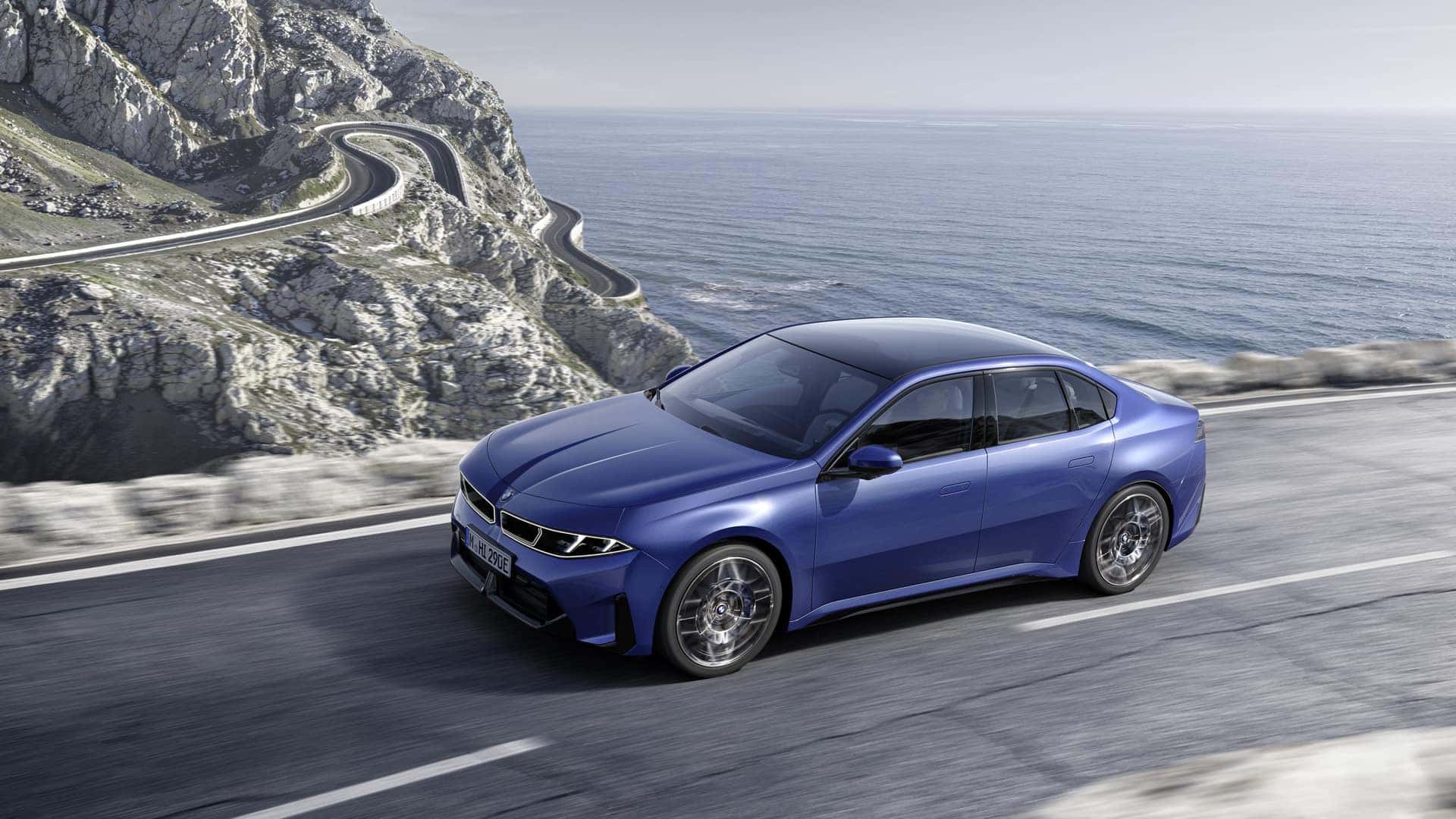
Where the i3 separates itself is the BMW Heart of Joy integrated processor, which manages drivetrain and driving dynamics simultaneously across four high-speed processing units. The optional Adaptive Suspension on the i3 lets drivers tune ride behavior to road conditions, a feature also available on the Model 3 Performance.
For drivers who want the longest range between stops and the fastest charge when they do stop, the i3’s 800V system is a meaningful advantage.
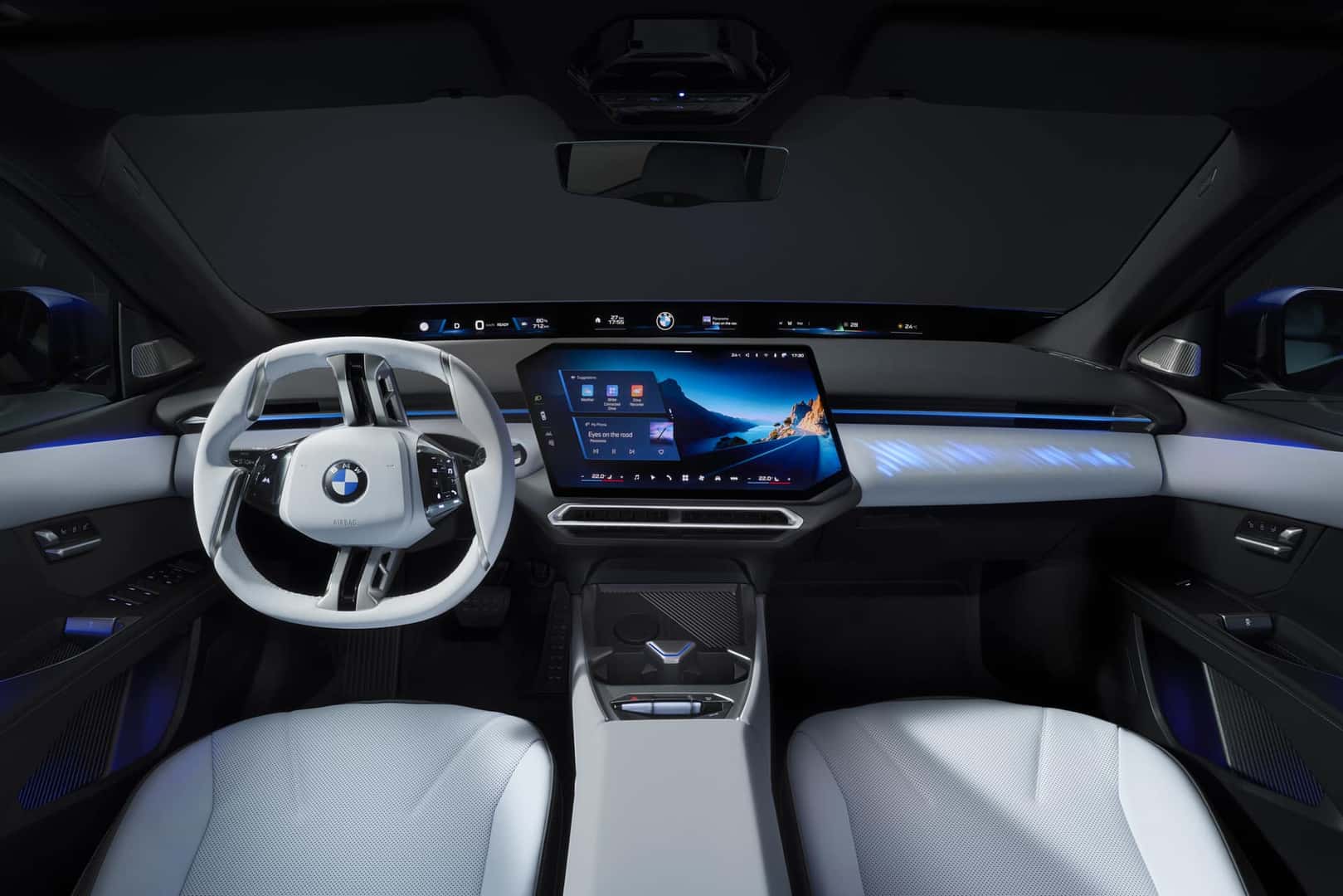
The BMW i3 interior is oriented entirely around the driver. The 17.9-inch parallelogram-shaped central touchscreen tilts toward the driver and runs BMW Operating System X. The BMW Panoramic Vision system spans the full width of the windshield, placing real-time vehicle information directly in the driver’s line of sight without requiring a look away from the road.
Flush-mounted, electrically operated door handles with automatic extension contribute to the i3’s exterior and interior design coherence.
The Tesla Model 3 uses a 15.4-inch center touchscreen as its primary control surface, with an 8-inch rear-passenger touchscreen available on the Premium and Performance models. Cargo space is confirmed at 24.1 cubic feet.
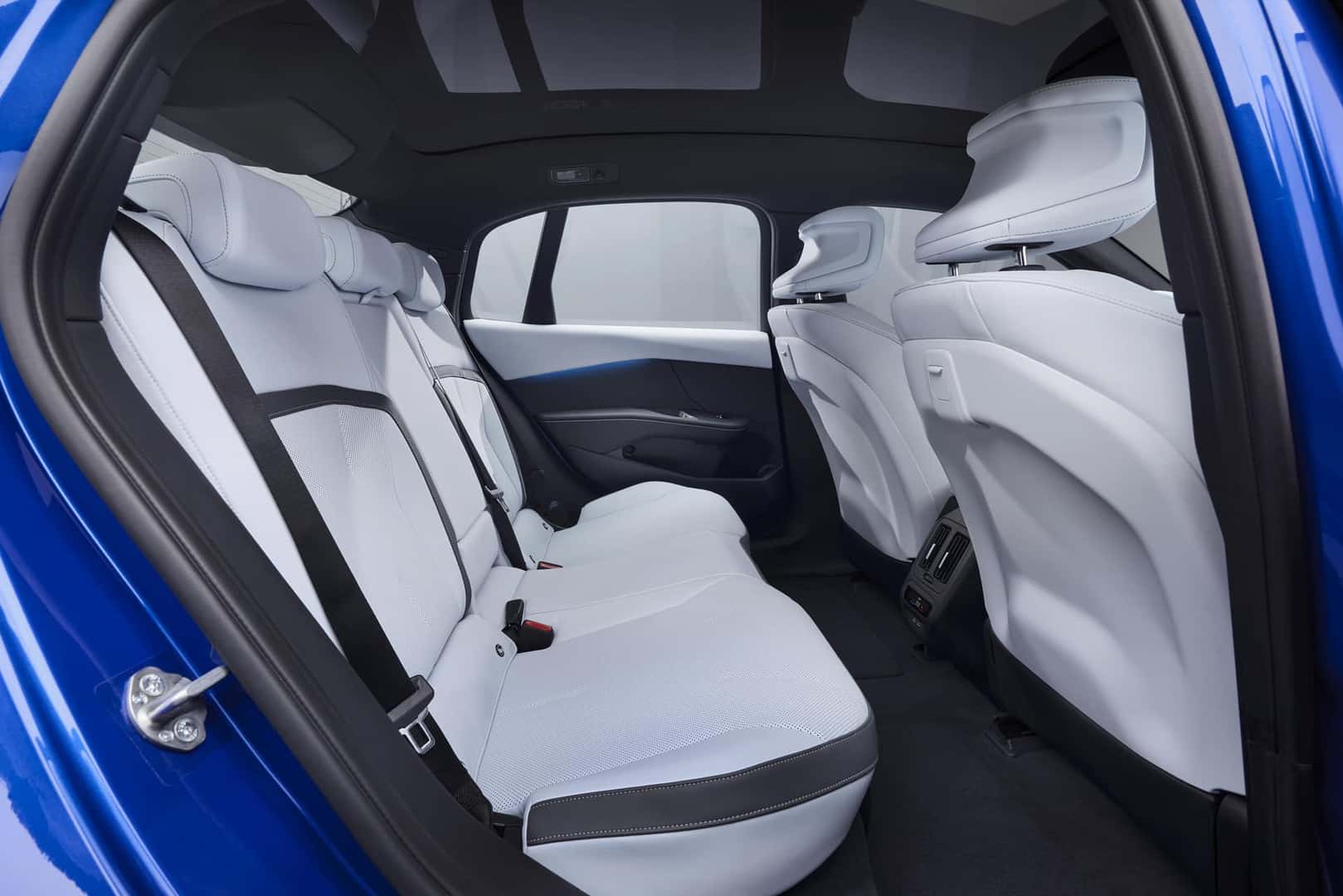
BMW has not published interior cargo volume or seating dimensions in the verified specs for the i3 at this time. Verified cargo figures will be updated once BMW releases full EPA and dimension data ahead of the 2027 U.S. market launch.
Both vehicles seat five passengers. The Tesla Model 3 carries a panoramic glass roof as standard. The BMW i3 offers the Iconic Glow exterior package with front-end lighting animations as an available option, adding a distinct visual signature at night.
Ambient lighting comes standard on the BMW i3, with a full-cabin color display at night. Customizable ambient lighting on the Model 3 is available on the Premium and Performance models.
BMW ConnectedDrive and tech features
The BMW i3 introduces BMW Panoramic Vision as a pillar-to-pillar windshield display, a feature that goes well beyond a conventional head-up display by putting a full-width digital information layer in the driver’s forward field of vision. An optional 3D Head-up Display adds a second layer of depth to that experience.
The i3 runs a BMW AI assistant built on Amazon Alexa technology.
Standard safety equipment on the i3 includes Lane Departure Warning and Level 2 Active Cruise Control with simultaneous braking, acceleration, and lane centering management.
The Tesla Model 3 comes with Autopilot as standard, covering adaptive cruise control, forward collision warning, and lane keeping assistance. A 30-day trial of Full Self-Driving, Supervised, is included. Full Self-Driving, Supervised, requires the driver to remain attentive at all times and is not an autonomous system. The Model 3 also includes Sentry Mode, which monitors the vehicle’s surroundings while parked. Standard safety features include Automatic Emergency Braking, Lane Departure Avoidance, and multiple airbags.
Both vehicles support over-the-air software updates. The i3’s bidirectional charging capability, vehicle-to-load, vehicle-to-home, vehicle-to-grid, is a tech differentiator with no confirmed equivalent in the Model 3’s verified specifications. This means the i3 can function as a mobile energy source for home backup power or on-site power supply.
Tesla’s warranty for the Model 3 covers four years or 50,000 miles basic, with a battery and drive unit warranty of eight years or 100,000 miles, minimum 70% battery capacity retention at the end of that period. Tesla’s Supercharger network is well established and the 225 kW maximum charge rate adds up to 170 miles in approximately fifteen minutes under constant-speed conditions, per Tesla’s published data.
BMW has not yet published official warranty terms for the 2027 i3 in the verified specs provided. Sharpe BMW can confirm warranty coverage when the vehicle reaches the U.S. market in 2027. What the i3 brings to the ownership equation is a 400 kW charge capability that significantly outpaces the Model 3, meaning charge stops are shorter on the vehicles that support that rate. The NACS charge port is standard, and a CCS adapter is included. The 440-mile estimated range reduces how often charging is required.
The i3’s bidirectional charging is a practical ownership benefit for drivers with home energy storage goals or frequent off-grid use. No dollar figures are compared here, as pricing on both vehicles is subject to change.
The i3 is the better fit for the driver who wants the most range, the fastest charging, and a BMW sports sedan around it. The Model 3 is the better fit for the buyer who wants a proven platform and earlier availability.
The 2027 BMW i3 arrives in the U.S. in 2027, and Sharpe BMW in Grand Rapids is the place to get early information, register your interest, and get on the list before inventory arrives. Speak with a product specialist at the dealership to learn about current BMW electric vehicle inventory, ConnectedDrive features, and what the i3 means for drivers in the Grand Rapids area. No other sedan in this segment pairs 440 miles of estimated range with 400 kW charging and a full-width Panoramic Vision display.
Yes. The BMW i3 50 xDrive has an estimated range of 440 miles. The Tesla Model 3 Performance, AWD, is EPA-rated at 363 miles, and the base Model 3 RWD is rated at 321 miles.
The BMW i3 supports up to 400 kW DC fast charging via its 800V architecture. The Tesla Model 3 supports up to 225 kW via Tesla’s Supercharger network.
The BMW i3 50 xDrive uses a dual-motor AWD setup through BMW’s xDrive system, with one electric motor on each axle.
BMW Panoramic Vision is a pillar-to-pillar windshield display that places a digital gauge cluster and real-time vehicle information across the full width of the windshield within the driver’s field of vision. It is standard on the BMW i3 50 xDrive.
Yes. The BMW i3 includes bidirectional charging, covering vehicle-to-load, vehicle-to-home, and vehicle-to-grid capability. This allows the vehicle to supply power back to a home or external device.
The BMW i3 Sedan will be available in the U.S. starting in 2027. Sharpe BMW in Grand Rapids can register your interest now.
Yes. The Tesla Model 3 is currently in production and available for purchase. The BMW i3 is confirmed for U.S. availability in 2027.
The BMW i3 uses a NACS charge port as standard. A CCS adapter is included.